

By Rick White, Bradford Construction Management
In recent years, the push for sustainable housing has led many homeowners in Massachusetts and New Hampshire to consider adding an Accessory Dwelling Unit (ADU) to their properties. However, one critical question arises: can the existing septic system handle this additional load? Understanding the capacity of your septic system and ensuring compliance with the applicable local regulations is essential for homeowners contemplating such expansions. This article provides a comprehensive guide on septic system capabilities, relevant state regulations, and the process for evaluating and potentially upgrading your system, often requiring expertise in professional construction management services.
As the demand for housing grows, many individuals are grappling with the feasibility of adding an ADU, particularly in regions with stringent health codes and environmental regulations. Therefore, we will detail separate pathways for Massachusetts and New Hampshire, emphasizing specific state requirements regarding septic systems and the necessary permitting processes. We will also address the options available for upgrading existing systems, which may be required to support new construction.
Massachusetts
Understanding Massachusetts’ septic regulations is vital for homeowners considering an ADU. The state’s Title 5 laws establish standards specifically applicable to septic systems in Massachusetts.
Title 5 Compliance
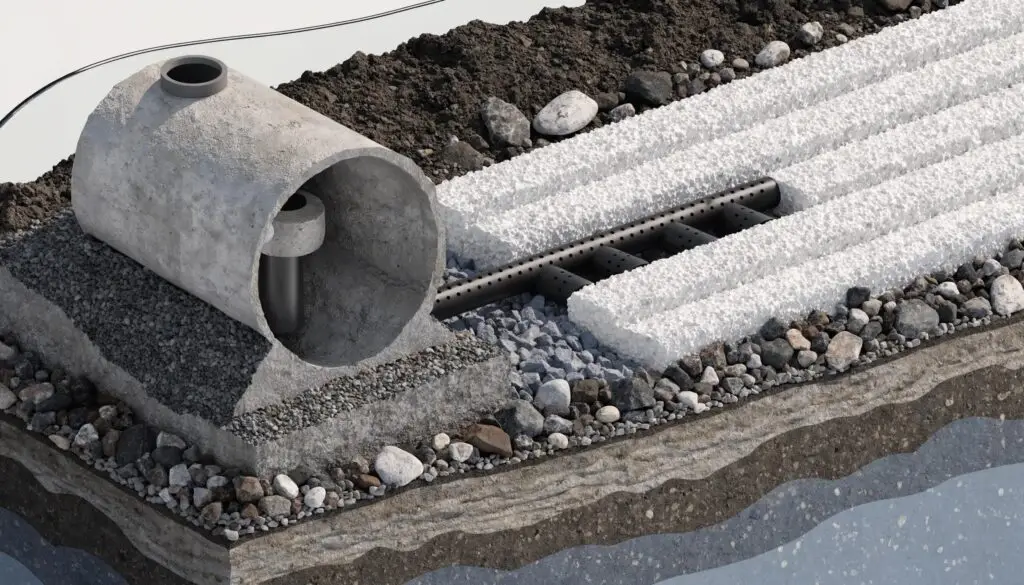
Title 5 is a Massachusetts state regulation governing the design, operation, and inspection of septic systems to protect public health and the environment. It is applicable only in Massachusetts and does not apply in New Hampshire. When adding an ADU, homeowners must comply with Title 5 provisions, including conducting inspections as required by 310 CMR 15.301(5). This regulation treats the addition of an ADU as an expansion of use, triggering an inspection even if the system was previously compliant. Homeowners should not assume regular inspections at fixed intervals but must follow inspection requirements based on system expansion or permit triggers. MassDEP also treats an ADU constructed in a new building requiring an occupancy permit as new construction, even when bedrooms elsewhere are removed; a designer and the approving authority must evaluate the actual proposal.
Assessing Septic System Capacity
Evaluation involves counting bedrooms separately in the principal dwelling and ADU, then determining system design flow accordingly. Size and capacity assessment should not rely on simple occupant counts. Shared existing systems for principal and ADU use must meet criteria including two-compartment tanks or two tanks in series; separate ADU systems have their own design standards. Compliance requires adherence to setbacks, design flow, and new-construction requirements when applicable. Removing a bedroom elsewhere does not provide a blanket waiver for additional flow.
Permitting and Upgrade Considerations
Homeowners must submit required documentation to local health departments as part of the permitting process. Compliant system expansion is possible if new-construction standards, setbacks, and additional design flow requirements can be satisfied. Existing approvals, variances, wells, and reserve areas must be reviewed carefully by professionals and authorities to determine whether upgrades or replacements are necessary—not automatic replacements or automatic acceptance.
New Hampshire
Septic system regulations in New Hampshire differ from Massachusetts and are governed under state statutes RSA 674:72 and related administrative rules. Title 5 does not apply here. Source reference for this section is New Hampshire RSA 674:72 and NHDES septic system approval guidance, both checked September 9, 2026.
Septic System Regulations and Approvals
NHDES requires adequate provisions for water supply and sewage disposal approved under RSA 485-A before construction. Separate septic systems are not required for the principal dwelling and ADU. Installation of an approved system is mandatory if the existing septic system lacks construction or operation approval under current or predecessor rules, fails, or otherwise needs to be repaired or replaced. Capacity review remains essential.
Local Building and Zoning vs. State Septic Approvals
Municipalities under RSA 674:72 may not impose septic system requirements exceeding those set by NHDES for a home plus ADU. While local zoning and building reviews handle land use and construction permits, septic system approval is a state-level process requiring plans prepared and submitted by a NH-permitted septic system designer. NHDES issues both Approval for Construction and Approval for Operation before septic systems can be used. Revised septic rules and forms effective from February 1, 2026, must be followed for system submissions.
Capacity Assessment and Permitting Process
Homeowners should undertake a thorough assessment of their septic system supported by NH-permitted septic designers to verify capacity and compliance. A septic approval does not replace local building permits or other approvals that may apply to the ADU.
Considerations for Property Owners
Adding an ADU involves understanding legal requirements, system feasibility, and potential costs in your specific state.
Feasibility and Professional Engagement
Assess lot size, septic system condition, and municipal requirements early. Engaging licensed professionals such as septic designers or engineers familiar with state regulations can provide clarity on required upgrades and compliance hurdles. Bradford Construction Management (BCM) coordinates ADU design-build scopes with qualified professionals but does not certify septic system viability in initial consultations.
Documentation and Project Planning
Gather and provide your existing approved septic system design and operation records, detailed bedroom layouts for the house and proposed ADU, inspection and maintenance documents, well locations, and proposed ADU footprint. Designers and approving authorities will determine upgrade needs and reusability of existing systems.
FAQs
Is Title 5 applicable in both Massachusetts and New Hampshire?
No. Title 5 is a Massachusetts-specific regulation for septic systems. New Hampshire operates under its own statutes and rules for septic system design, approval, and operation.
Does adding an ADU automatically require a new septic system?
Not necessarily. In Massachusetts, if the system can meet new-construction requirements and additional design flow, expansion of the existing system may be possible subject to inspection and approval. In New Hampshire, system adequacy is reviewed, and installation of an approved system is required if the current system lacks proper approvals, has failed, or needs replacement.
Are inspections required on a fixed schedule for septic systems supporting ADUs?
No fixed regular inspections apply universally. In Massachusetts, inspections are required under specific conditions such as system expansions or permit triggers as per 310 CMR 15.301(5). In New Hampshire, inspections occur as part of the approval process and system operation requirements.
Can municipalities in New Hampshire impose stricter septic requirements for ADUs?
No. Under RSA 674:72, municipalities may not enforce septic system regulations exceeding those of NHDES for homes and ADUs.
Summary
Homeowners in Eastern Massachusetts and Southern New Hampshire seeking to add an ADU must carefully evaluate their septic system’s capacity and compliance with applicable state laws. Separate pathways exist for Massachusetts Title 5 compliance and New Hampshire RSA and NHDES regulation adherence. Working with qualified septic designers and engaging professional construction management services such as BCM helps coordinate the complex design-build and permitting process involving septic considerations, though without guarantee. Before committing to an ADU layout, bring the existing septic approvals and proposed bedroom plans into the scope discussion. Bradford Construction Management asks whether the project needs a new septic system or a tie-in and whether engineered plans are available. Learn about our ADU design-build services in Eastern Massachusetts and Southern New Hampshire, then contact our team to discuss your property.