
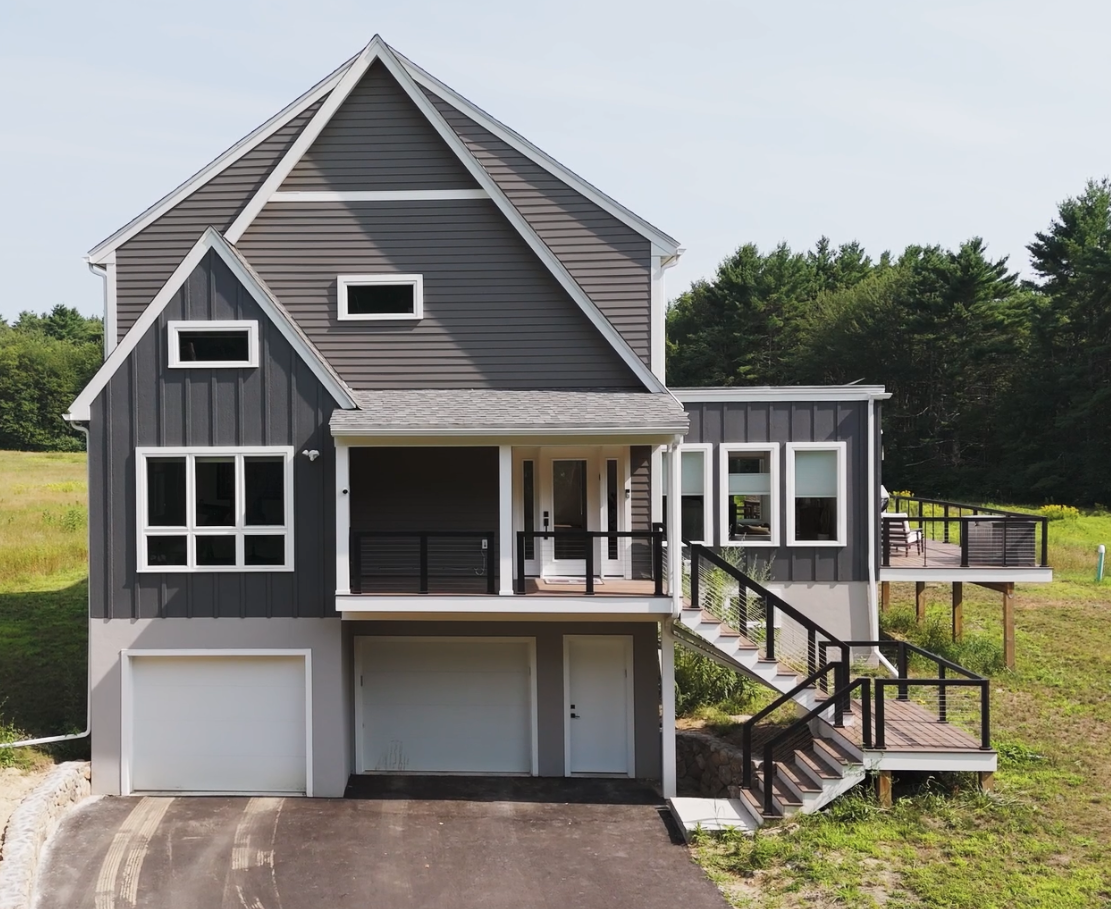
Energy Efficient Custom Home Builder in New Hampshire & Massachusetts
Most builders treat energy efficiency as a checklist of upgrades. We treat it as building science, engineering every system in your home to perform together from day one.
Your Home Is a System, Not a Collection of Parts
Every custom home - from modern designs to traditional builds - is made up of interconnected systems. When they are designed together with building science principles, the home performs. When they are selected separately and bolted together, problems show up - drafts, moisture issues, uneven temperatures, and energy bills that never come down.
The Thermal Envelope: Your Home's First Line of Defense
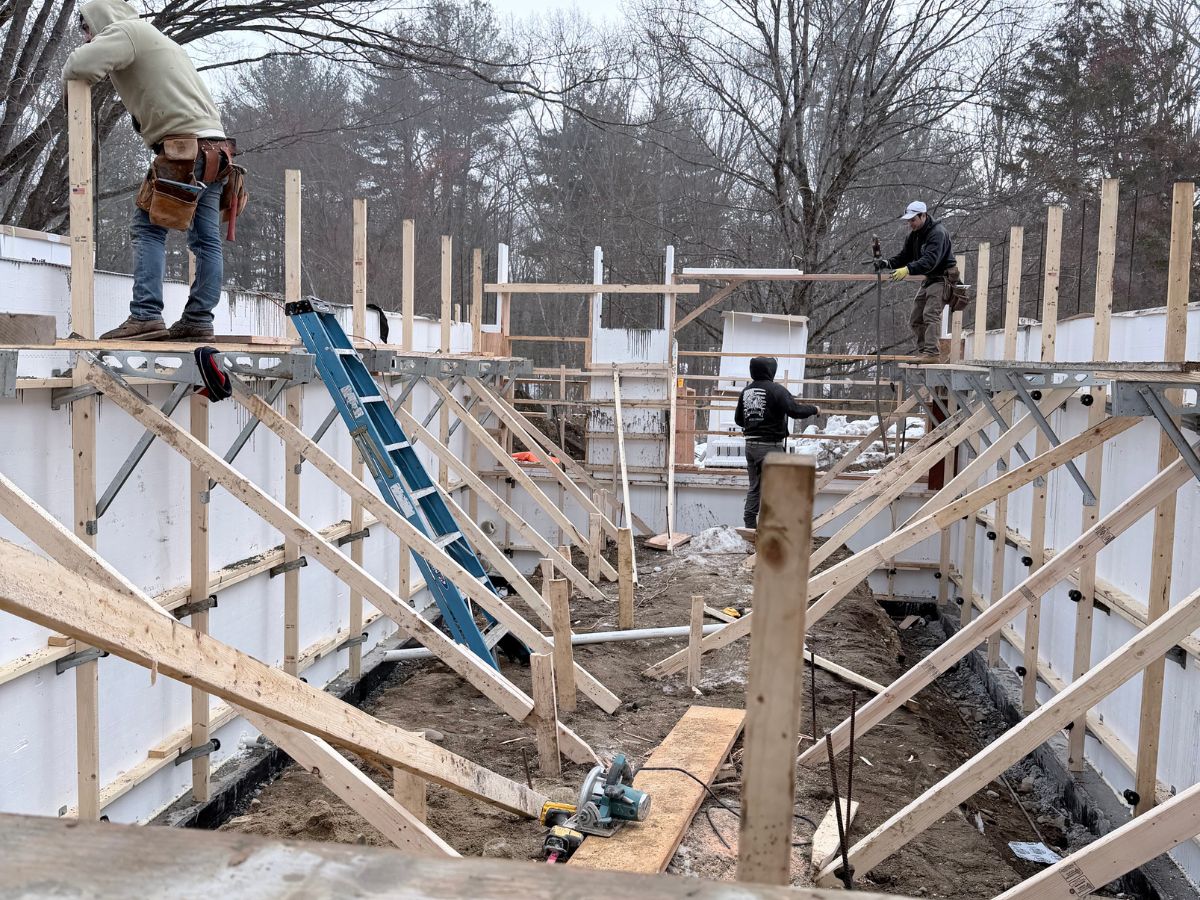
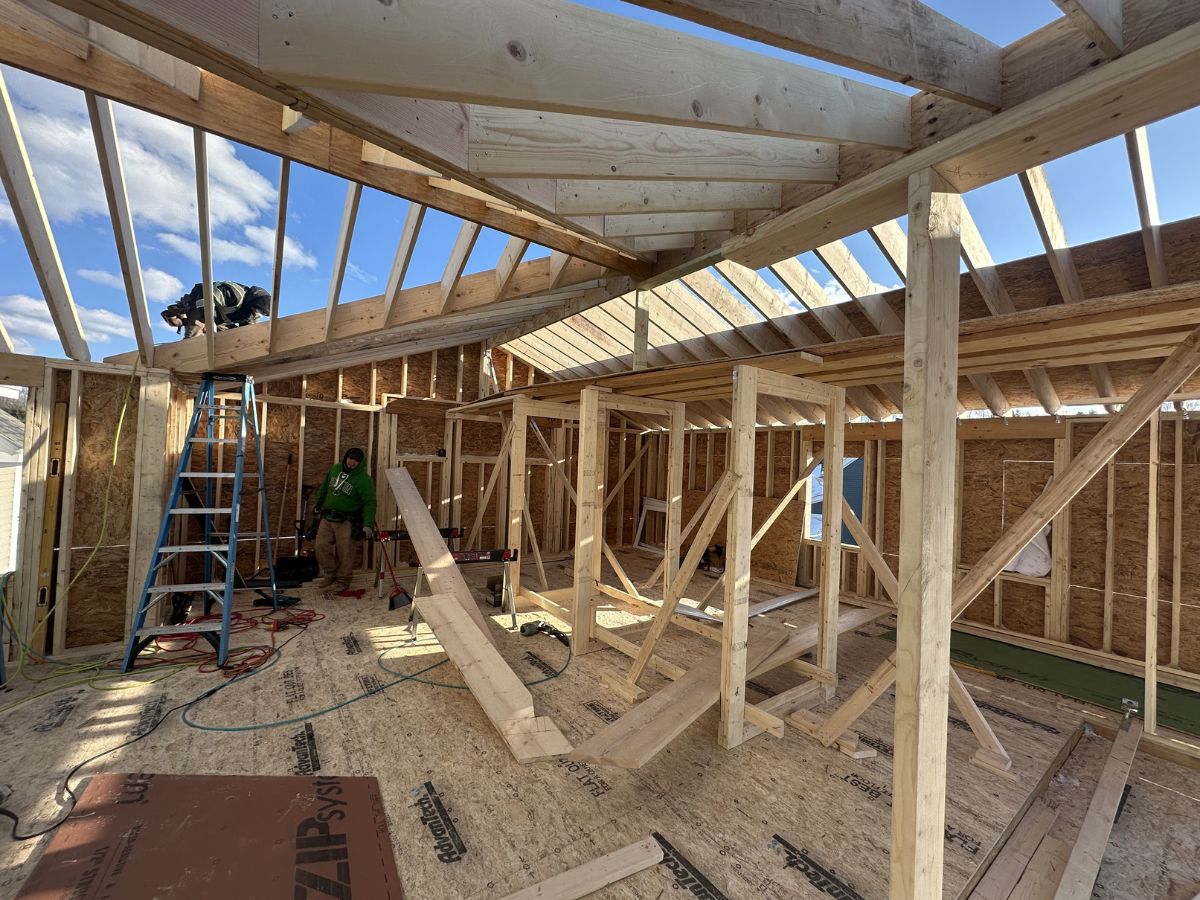
Bradford's approach starts with the thermal envelope - the continuous barrier of insulation, air sealing, and moisture management that separates conditioned space from unconditioned space. We design the envelope first, then size HVAC systems and select mechanicals to match. A continuous thermal envelope eliminates the weak points that standard code-built homes accept as normal: thermal bridging at studs, air leaks at penetrations, and wall assemblies that trap moisture.
Advanced Framing & Air Sealing
Advanced framing techniques reduce thermal bridging by using fewer but strategically placed structural members, allowing more insulation in the wall cavity. Combined with meticulous air sealing at every electrical box, window rough opening, and framing joint, the finished home has dramatically lower air infiltration than a standard build. The result is a home that stays comfortable in every room, every season, without relying on the HVAC system to compensate for an envelope full of holes.
When and Why We Build with ICF
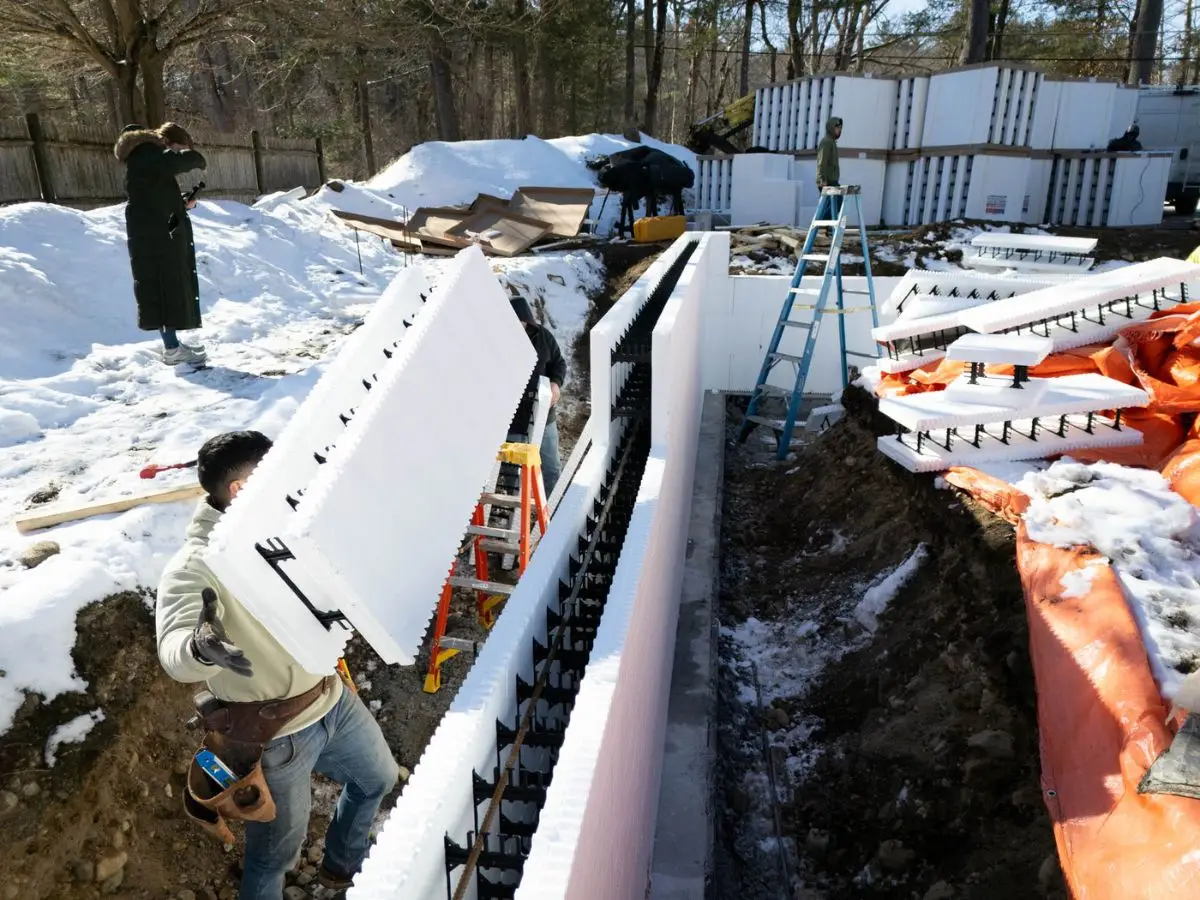
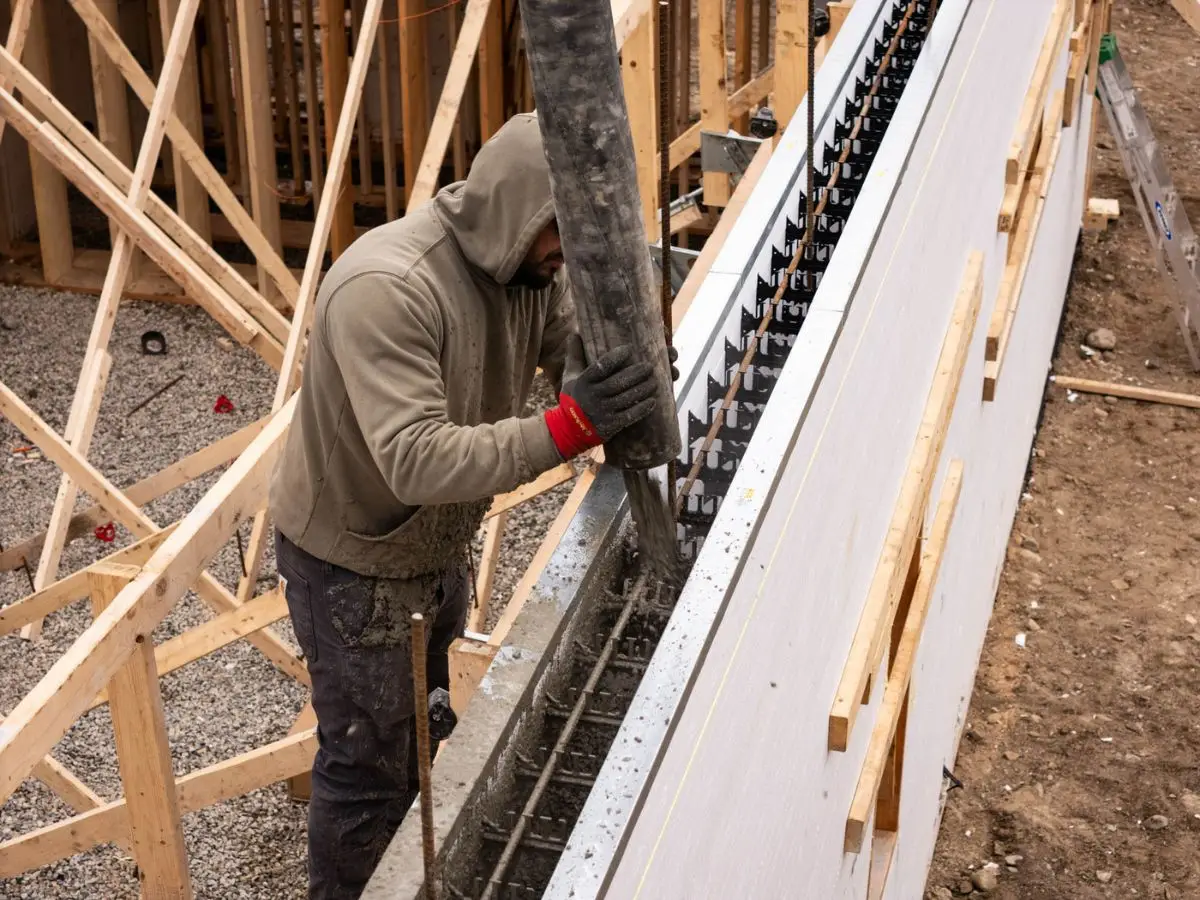
Not every custom home requires insulated concrete form construction, but certain projects benefit from it significantly. Rick's background in commercial construction - where ICF is a standard method, not a specialty upgrade - means Bradford can evaluate whether ICF is the right fit for your project and execute it with the precision it demands.
Where ICF Makes the Most Sense
ICF walls deliver continuous R-23+ insulation with zero thermal bridging, superior structural strength, and resistance to moisture, mold, and pests. Bradford typically recommends ICF for custom homes where energy performance is a primary goal, for ADU projects where a smaller footprint benefits from maximized envelope performance, and for builds in exposed or high-wind locations where structural resilience matters.
The build premium for ICF walls runs approximately 16% over conventional wood framing (industry average). That is a real cost we discuss honestly during the design-build process - not a hidden line item. See our full custom home cost breakdown for context, or explore our dedicated ICF construction page.
ICF Is Not the Only Path to Performance
A well-executed wood-framed home with advanced framing, continuous exterior insulation, thorough air sealing, and high-performance windows can achieve major performance gains over a code-minimum build at a lower cost than ICF. The right wall system depends on your performance goals, your budget, and your site conditions.
During our design-build process, we model both options so you see the performance difference and the cost difference side by side. You make the call based on real numbers, not sales pressure.
Want to know what a high-performance build looks like for your project? We will walk you through the options and the real costs.
Schedule Your Free ConsultationThe Mechanicals That Make Your Home Perform
A high-performance envelope needs high-performance systems to match. We select and size every mechanical system based on your home's actual thermal load, not industry rules of thumb.
Heat Pumps & ERV Systems
Modern cold-climate heat pumps deliver efficient heating and cooling in a single system. Paired with an energy recovery ventilator (ERV), your home gets fresh filtered air without losing the energy you have already paid to condition.
Ductwork Quality & Indoor Air
Ductwork placed within conditioned spaces and sealed to measurable standards means the air you pay to heat or cool actually reaches the rooms it is meant for. This also contributes to healthier indoor air quality.
High-Performance Windows
Triple-pane and high-performance double-pane windows are specified based on orientation, solar exposure, and climate zone. The right window in the right location reduces heating loads in winter while managing solar gain in summer.
Solar-Ready Design
Even if solar panels are not in your initial budget, we design the roof structure, electrical panel, and conduit pathways so solar can be added later without expensive retrofitting. Future-proof construction, built in from day one.
Build Cost vs. Ownership Cost
The first question most homeowners ask is "What does it cost to build?" The better question is "What does it cost to own this home for the next 20 years?"
A code-minimum home is cheaper to build but more expensive to operate. Higher utility bills every month, more frequent HVAC maintenance, earlier system replacements, and comfort issues that no amount of thermostat adjustments will fix. Those costs compound year after year.
A high-performance home costs more upfront but delivers dramatically lower monthly utility costs, fewer maintenance calls, longer system lifespans, and consistent comfort in every room. When you model the total cost of ownership over 10 to 20 years, the high-performance home often costs less overall.
Transparent Pricing, Real Numbers
We do not make vague promises about "energy savings." During our design-build process, we model energy performance and provide specific cost comparisons so you can make an informed decision.
Integrating Efficiency into the Design-Build Process
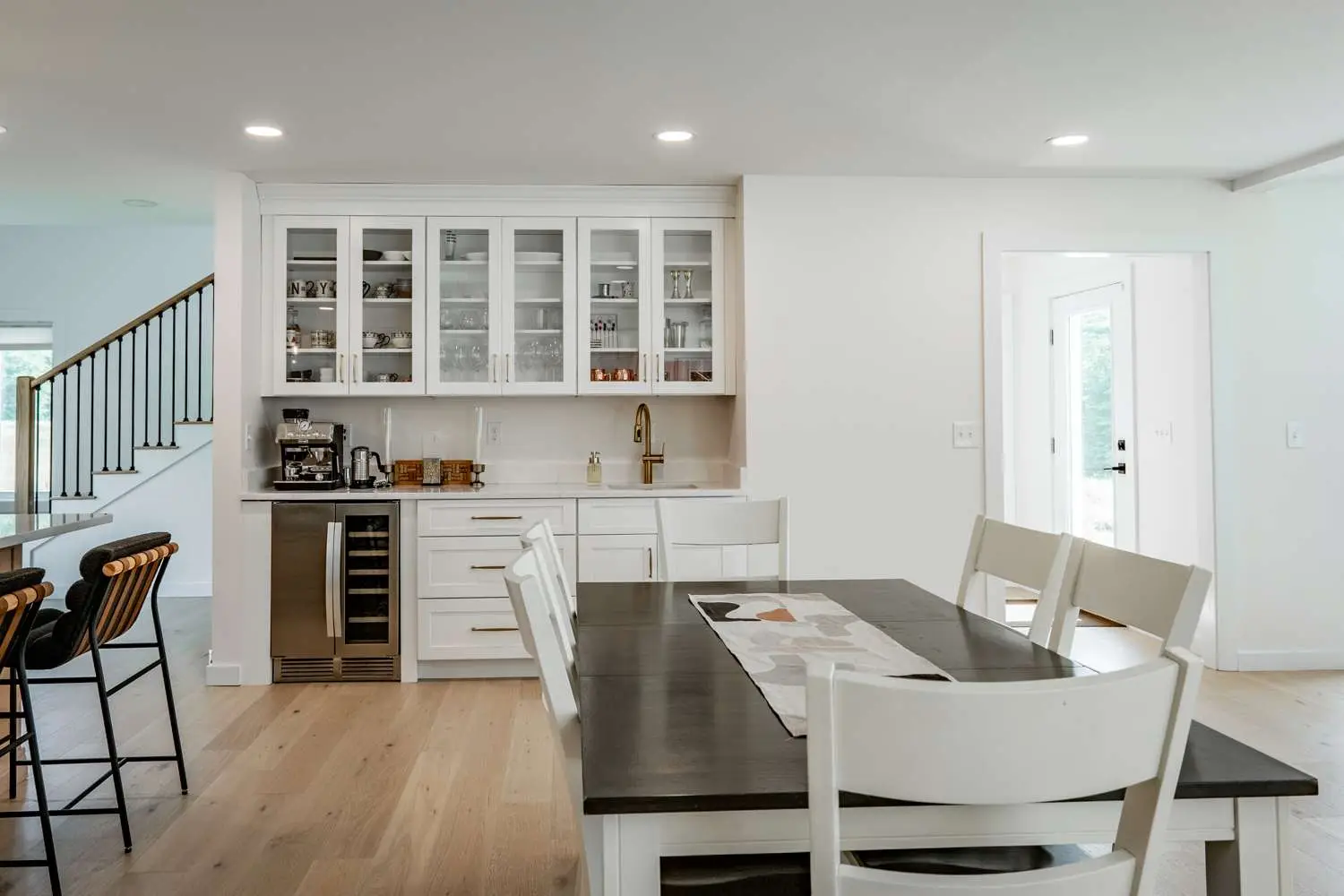
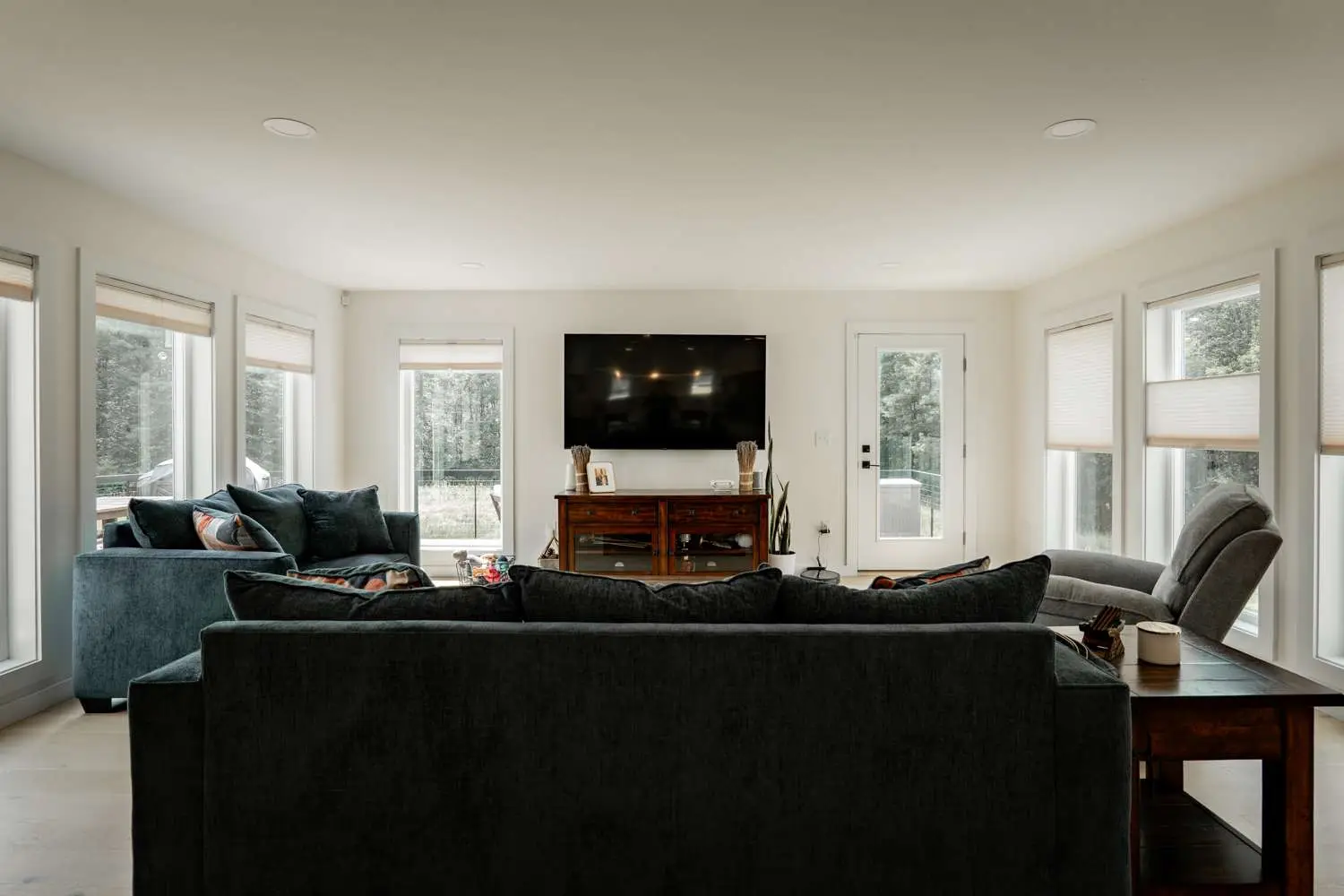
Energy efficiency is not an add-on. It is built into every phase from the first conversation to lifetime support.
Performance Modeling
Energy goals defined during discovery. Envelope strategy selected based on budget and performance targets.
Envelope Design
Wall assemblies, insulation, air barrier, and moisture management specified as an integrated system.
System Selection
HVAC, ventilation, and windows sized to the actual thermal load, not oversized for safety margin.
Precision Build
Air sealing verified at every stage. Ductwork placed within conditioned space. Daily photo documentation.
BHS Optimization
Post-build system tuning and lifetime maintenance through Bradford Home Services.
High-Performance Homes Need High-Performance Support
A high-performance home has more sophisticated systems than a standard build. Heat pumps, ERVs, and tightly sealed envelopes all require specific maintenance to keep performing at their designed levels. Most builders hand over the keys and move on. Bradford stays.
Through Bradford Home Services, you receive ongoing support: seasonal system tuning, filter and component maintenance, and priority service when something needs attention. Your high-performance home stays high-performance for the life of the building, not just the first year.
This is the "builder for life" commitment. We build it right, we document it daily, and we support it long-term.
Frequently Asked Questions About Energy Efficient Custom Homes
It depends on which strategies you choose. Advanced framing and air sealing add modest costs to a standard build. ICF construction adds approximately 16% to wall costs (industry average). High-performance windows and heat pump systems are priced during our design-build process so you see the exact impact before committing. The upfront premium is typically recovered through lower utility costs within 7 to 12 years.
Insulated Concrete Forms (ICF) are interlocking foam blocks that are stacked, reinforced with steel, and filled with concrete. The result is a wall with continuous R-23+ insulation, superior structural strength, and excellent sound insulation. ICF is not required for every project. Bradford recommends it when the project goals, site conditions, and budget justify it - particularly custom homes prioritizing energy performance and ADU projects where envelope efficiency has an outsized impact on a smaller footprint.
Homes built with a comprehensive building science approach - tight envelope, right-sized HVAC, and high-performance windows - typically achieve 40-60% lower energy costs compared to code-minimum construction. We provide project-specific energy modeling during the design phase so your projected savings are based on your home, not industry averages.
Yes. A well-executed wood-framed home with advanced framing, continuous exterior insulation, thorough air sealing, and high-performance windows can achieve significant performance improvements over a code-minimum build at a lower cost than ICF. We model both approaches during design so you see the performance and cost trade-offs clearly.
Bradford Construction Management serves homeowners across Eastern Massachusetts and Southern New Hampshire. Our core areas include the North Shore (Newburyport, Ipswich, Beverly), the Merrimack Valley (Haverhill, Andover, North Andover, Georgetown), and Southern New Hampshire (Exeter, Portsmouth, and surrounding communities). Contact us to discuss your project location.
Ready to Build a Home That Performs?
Tell us about your project and performance goals. We will walk you through the options, the real costs, and what it means for your home's long-term value.