
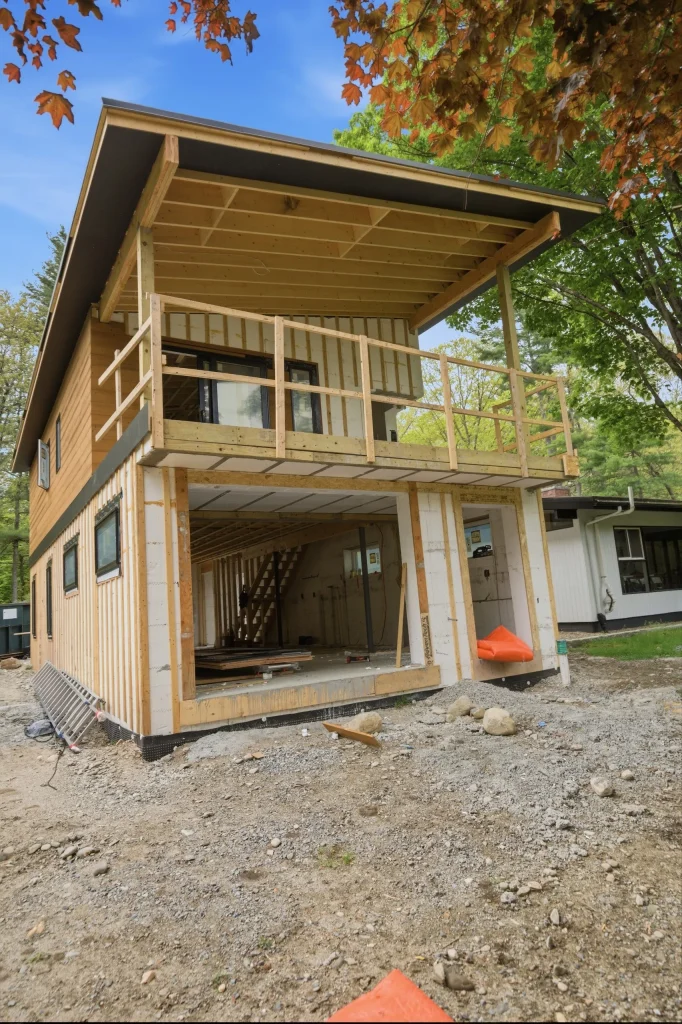
Heat loss through poorly insulated attics drives the melt-freeze cycles that rebuild ice dams every winter, even after scraping or heat-cable fixes. As a design-build contractor, we correct the root cause through attic insulation, air sealing and ventilation planned as one system.
Key Takeaways
- Ice dams form in northern climates through repeated melting-freezing cycles that push water under shingles.
- Trapped water penetrates attics and damages ceilings, walls, and contents within days of dam formation.
- Heat from inside homes warms roof decks, causing upper snow to melt and refreeze at eaves.
- Proper attic insulation and ventilation prevent heat loss that creates the conditions for ice dam formation.
Why Do Ice Dams Keep Coming Back Every Winter?
Heat loss through an uninsulated or poorly ventilated roof melts snow sitting above the warm part of the attic. That meltwater has nowhere to go but down. Once it reaches the cold eave overhang, the water refreezes into solid ice. Every mild afternoon followed by a cold night repeats this cycle, which is exactly why how to prevent ice dams starts with understanding the heat loss, not just the ice itself.
The same roof areas dam up year after year because the underlying cause never changes. Heavy snow melts during the day, runs to the eave, and freezes overnight. Left unaddressed, that freeze-thaw pattern builds thicker ice with each storm, and the dam only grows.
Why does my roof keep forming the same ice dam in the same spot?
Roof framing and insulation gaps rarely move from one winter to the next. The warm spots on the roof deck stay in the same place. Stopping ice dams on roof surfaces means finding and correcting those specific heat-loss points, not just clearing ice after the fact.
Does a home renovation affect ice dam risk?
Yes. Insulation and ventilation upgrades meant to address ice dams sometimes get lost when separate contractors handle framing, insulation, and roofing independently. For example, a home addition is a chance to insulate and vent the new roof correctly. We work as one team through design and construction, so these details don’t fall through the cracks between trades.
For homeowners across our Plaistow, NH-based service area, the freeze-thaw climate is a given. Avoiding ice dams during a renovation means treating attic performance as part of the build plan, not an afterthought:
- Confirm attic insulation depth and continuity during design, not after drywall closes it up.
- Verify ventilation paths from soffit to ridge before the roofing goes on.
- Coordinate insulation, ventilation, and roofing trades under one accountable schedule to ensure the home qualifies as an energy-efficient home.
What Do You Need Before You Start Prevention?
Preparation starts well before the season’s first snowfall. Two tasks matter most: clean gutters and a plan for the roof system itself. Homeowners on the North Shore and in the Merrimack Valley who want to know how to prevent ice dams should treat these as the foundation, not an afterthought.
Gutters come first. Clearing leaves, sticks, and other debris from gutters and downspouts before winter sets in gives melting snow a clear path off the roof. We ask every client to check this in late fall. Clogged gutters are the single easiest problem to fix and the easiest one to ignore.
Preparation checklist before winter:
- Clean all gutters and downspouts of leaves, sticks, and debris
- Confirm downspouts drain away from the foundation
- Walk the roofline to spot sagging or clogged sections
Why does gutter condition affect ice dam formation?
Clear gutters let melting snow flow through the downspouts instead of pooling at the eave. When gutters are blocked, that meltwater has nowhere to go and refreezes right where the roof meets the wall, which is exactly where stopping ice dams on a roof gets harder.
Does renovation planning factor into prevention?
Yes. A single contract covering design and construction lets homeowners address attic insulation and ventilation as part of a planned addition, rather than discovering gaps mid-project. Design-build removes the blame-shifting that surfaces when insulation issues appear after walls are already closed up, which is often the real key to avoiding ice dams for good.
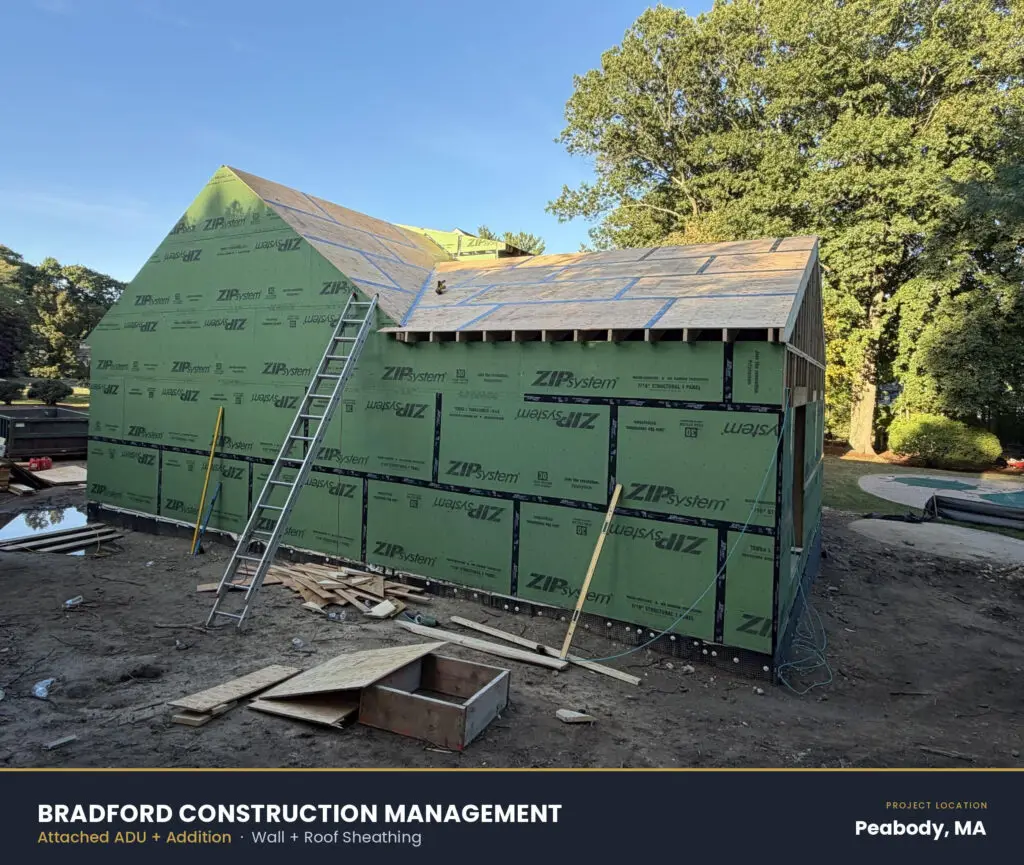
How Do We Build Homes To Avoid Ice Dams?
Ice dam prevention starts with one accountable team, not a chain of separate subcontractors. Our design-build process keeps insulation, ventilation, and roof detailing under a single point of responsibility, from first sketch to final walkthrough.
Here is how we approach every project to prevent ice dams:
- Design the building envelope and roof system together, so insulation levels and ventilation paths get decided before framing starts, not patched in afterward.
- Keep architect and builder on one contract, removing the miscommunication between separate companies that often leaves attic ventilation or roof deck insulation unfinished, a common cause of recurring ice dams.
- Detail a continuous, well-sealed building envelope, whether the walls are conventional wood framing or insulated concrete forms, so heat does not leak into the roof assembly.
- Schedule seasonal checks through our ongoing homeowner support, reviewing attic insulation, ventilation, and roof details before winter weather arrives.
Why Does Fragmented Construction Lead To Ice Dams?
Separate contracts invite blame-shifting. When architects, roofers, and insulation crews work independently, gaps in the roof assembly go unnoticed until water intrudes. Homeowners end up managing that coordination themselves, the exact gap that lets ice dam causes go unresolved.
Does Better Insulation Alone Stop Ice Dams On A Roof?
Insulation matters, but it is not the whole answer for how to stop ice dams on roof surfaces. Ventilation and air sealing need to work together with insulation to keep roof deck temperatures even. That is why we treat the roof assembly as one system, designed and built by one team, rather than a stack of separate decisions made by different crews.
Learning how to avoid ice dams comes down to discipline: one team, one plan, and support that continues well past the final walkthrough.
What Mistakes Let Ice Dams Keep Returning?
Fragmented accountability lets ice dams come back year after year. When separate contractors each blame the other for a leak, nobody fixes the actual insulation or ventilation gap causing the problem in the first place. Design decisions get made without the roofer, builder, and insulation crew talking to each other. The root cause survives the repair.
Why does my ice dam keep coming back after repairs?
The repeat problem usually traces back to a handoff that got lost between trades. We keep a small, dedicated team involved from scope to completion, which means the person who diagnoses the gap is the same person who closes it out. That continuity matters more than most homeowners realize.
What happens if we ignore the leak?
Water leakage left unaddressed keeps causing structural deterioration. It often will not stop until every bit of snow and ice is cleared from the roof. Waiting costs more than it saves. Common mistakes we see:
- Blaming the roofer without checking attic insulation
- Patching shingles while skipping ventilation
- Delaying removal until deterioration spreads
FAQ
Why do ice dams keep forming in the same roof location every year?
Roof framing and insulation gaps don’t shift between winters, so the same warm spots on the roof deck persist. Stopping these dams requires correcting those specific heat-loss points rather than just removing ice after it forms.
How does Bradford Construction Management address ice dams differently from a typical repair?
As a licensed design-build contractor, Bradford Construction Management corrects the root cause through integrated attic insulation, air sealing, and coordinated trade scheduling. This team-based approach, based in Plaistow, NH, prevents insulation and ventilation details from falling through the cracks between separate contractors.
What should homeowners do before winter to help prevent ice dams?
Homeowners should clean all gutters and downspouts of debris, confirm downspouts drain away from the foundation, and walk the roofline to spot sagging or clogged sections. Clear gutters let melting snow flow off the roof instead of pooling at the eave.
Planning an Addition or Renovation Before Next Winter?
Ice dams return when heat keeps reaching the roof deck. If you are planning an addition, a renovation or a new home, that is the best time to get insulation, air sealing and ventilation right, because the roof assembly is open and one team can design it as a system. Contact Bradford Construction Management to talk through your project, or call 978-945-9771.